The Role of a D2C Ecommerce Agency in Crafting Your Brand Story
The Future of Retail: How D2C Ecommerce Services Can Change Your Company
The retail landscape is evolving, driven by the rise of direct-to-consumer (D2C) ecommerce services. Brand names are significantly seeking methods to attach with consumers on a personal degree while simplifying their procedures. This change not only enhances revenue margins but additionally modifies the purchasing experience markedly. As services adjust to these adjustments, the implications for brand name loyalty and consumer engagement become crucial. What techniques will define success in this brand-new period?
Comprehending the D2C Ecommerce Design
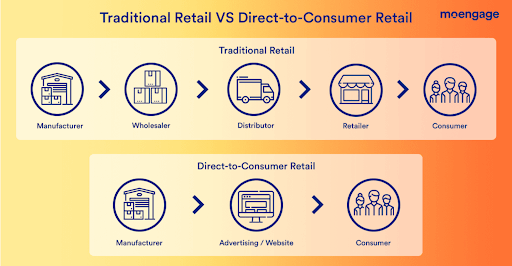
As consumers increasingly seek personalized buying experiences, the Direct-to-Consumer (D2C) ecommerce design has become a transformative method in retail. This design enables brands to offer directly to their customers, bypassing conventional middlemans like dealers and stores. By establishing a direct connection with customers, firms can gain deeper understandings right into customer preferences and behaviors.D2C ecommerce leverages electronic platforms, enabling brands to regulate their pricing, shipment, and marketing procedures. This strategy cultivates agility, permitting organizations to adapt promptly to market patterns and consumer feedback. Notably, D2C designs often utilize information analytics to boost item offerings and customer involvement strategies.In a significantly affordable landscape, the D2C version encourages companies to grow brand loyalty and create customized experiences that resonate with their target audience. In this method, recognizing the details of D2C ecommerce is essential for brands intending to grow in the modern retail setting.
Benefits of Direct-to-Consumer Methods
While numerous companies face the complexities of standard retail, the Direct-to-Consumer (D2C) technique uses distinctive benefits that can greatly boost brand efficiency. By removing middlemans, brands maintain greater control over their rates, product presentation, and general consumer experience. This straight connection fosters brand loyalty, as consumers feel more linked to the brand and its values.Additionally, D2C strategies often bring about higher earnings margins, since businesses can retain the entire list price instead than sharing it with sellers or suppliers. D2C models likewise allow brands to respond swiftly to market trends and customer preferences, promoting even more nimble inventory monitoring and product development. Services can produce tailored advertising and marketing projects that reverberate with their audience, eventually driving greater conversion rates. In this evolving retail landscape, D2C strategies provide a possibility for brands to separate themselves and attain lasting growth.
Leveraging Information Analytics for Customer Insights
Understanding Customer Habits Patterns
Just how can businesses efficiently decode the intricacies of consumer behavior in a quickly evolving electronic landscape? By using data analytics, firms can acquire beneficial understandings into their customers' choices, routines, and inspirations. Examining surfing patterns, acquisition history, and feedback allows brand names to determine trends and section their target market efficiently. This understanding not only boosts product offerings but likewise personalizes advertising techniques, promoting stronger client relationships. Additionally, organizations can keep an eye on social media interactions and online evaluations to evaluate belief and adjust to transforming consumer assumptions. This way, data-driven strategies empower brand names to anticipate demands and refine their strategies, inevitably resulting in enhanced consumer contentment and commitment in the competitive D2C ecommerce setting.
Predictive Analytics for Fads
As services strive to continue to be affordable in the D2C ecommerce landscape, leveraging anticipating analytics becomes necessary for determining emerging fads and customer choices. By analyzing historic information, firms can anticipate future buying behaviors, enabling them to customize their offerings efficiently. Predictive analytics allows sellers to section their target market based on acquiring patterns, making sure targeted marketing approaches that resonate with unique customer groups. In addition, these understandings promote stock monitoring, lowering overstock and decreasing stockouts. As brand-new trends arise, businesses can promptly adapt their line of product, enhancing client satisfaction and loyalty. Inevitably, the assimilation of anticipating analytics equips D2C brand names to make data-driven decisions, cultivating technology and development in a progressively vibrant market.
Enhancing Client Interaction With Customization
While lots of brand names identify the value of customer engagement, personalization becomes an essential technique to promote deeper connections with consumers (D2C Ecommerce Agency). By leveraging data analytics, brand names can tailor experiences to individual preferences, creating a much more pertinent buying trip. Tailored recommendations, targeted promotions, and customized web content greatly enhance the customer experience, making customers feel valued and understood.Moreover, using different interaction channels permits brand names to involve clients in ways that resonate with them. As an example, customized emails, social networks interactions, and tailored website experiences can drive commitment and repeat acquisitions. This method not just enhances customer contentment however likewise motivates brand advocacy, as completely satisfied consumers are much more most likely to share their favorable experiences with others.Ultimately, personalization is not just a fad but a basic element of effective D2C ecommerce techniques, making it possible for brand names to develop lasting relationships and raise their market existence
Enhancing Supply Chain and Workflow
.jpg?width=1200&height=800&name=thumbnail-1200x800%20(1).jpg)
Structure Brand Name Loyalty in a Competitive Market
Personalized Shopping Experience
The modern consumer landscape is defined by an overwhelming selection of products and brands, making it necessary for businesses to distinguish themselves through personalized buying experiences. By leveraging information analytics and consumer understandings, brands can customize their offerings to specific preferences, thereby improving customer satisfaction. Personalized suggestions, targeted promos, and customized interaction can cultivate a feeling of connection, making consumers feel valued. This method not only enhances immediate sales but also grows long-term brand loyalty. Furthermore, D2C ecommerce solutions make it possible for brand names to gather real-time feedback and adjust their strategies accordingly, making certain significance in a vibrant market. Ultimately, a personalized buying experience can transform casual customers into committed supporters, solidifying a brand's placement in an affordable landscape.
Engaging Brand Name Narration
Engaging brand storytelling works as an effective tool for companies endeavoring to construct loyalty in an open market. By weaving narratives that reverberate with consumers, brands can develop emotional connections that expand past transactions. Involving stories highlight a brand name's values, objective, and distinct marketing recommendations, allowing consumers to relate to the brand name on a personal degree. D2C Ecommerce Agency. This link fosters depend on and urges repeat acquisitions, as clients really feel straightened with a brand name's values. Furthermore, efficient storytelling can differentiate a brand name from its rivals, making it a lot more remarkable in a congested industry. As consumers increasingly seek credibility and meaning in their options, brands that buy interesting storytelling are most likely to cultivate long-term relationships and enhance client commitment
Future Trends in D2C Ecommerce Solutions
As consumer preferences advance, D2C ecommerce services are poised to go through substantial makeovers in the coming years. Enhanced personalization will certainly become a crucial fad, with brands leveraging AI and information analytics to customize shopping experiences to individual customers. In addition, sustainability will end up being a focal factor, as consumers increasingly seek environment-friendly items and transparent supply chains, motivating brands to adopt greener practices.Omnichannel methods will certainly additionally obtain grip, integrating online platforms with physical touchpoints to produce smooth client trips. Mobile business will certainly remain to expand, driven by advancements in technology and changing shopping behaviors, making it necessary for brand names to enhance their mobile user interfaces. Moreover, social business is readied to increase, with systems facilitating direct purchases via social networks, enhancing brand name interaction. Eventually, these trends signify a change toward a lot more nimble, consumer-centric methods in D2C ecommerce, making it possible for brand names to remain affordable in a swiftly altering landscape.
Regularly Asked Questions
What Preliminary Investments Are Needed for Starting a D2C Ecommerce Business?
Beginning a D2C ecommerce business needs first financial investments in website advancement, supply, digital marketing, and logistics. Furthermore, funds for branding, client service, and settlement processing systems are important to develop a successful on-line existence.
Just How Can Small Companies Take On Developed D2C Brands?
Small companies can complete with well-known D2C brands by concentrating on niche markets, leveraging tailored consumer experiences, utilizing social media for interaction, and executing nimble methods that adjust to customer responses and industry fads.
What Prevail Obstacles Faced by D2C Ecommerce Startups?
Typical obstacles faced by D2C ecommerce startups include minimal brand acknowledgment, high consumer purchase prices, supply chain administration problems, competitors from developed gamers, and the requirement for efficient electronic marketing approaches to drive web traffic and conversions. - D2C Ecommerce Agency
Just how Do Returns and Refunds Work in D2C Ecommerce?
In D2C ecommerce, refunds and returns generally involve clients starting the process with the internet site. Plans vary by firm, however the majority of give clear directions, durations, and conditions for returning things, making sure customer contentment and loyalty.
Exist Legal Factors To Consider for D2C Ecommerce Services?
Lawful considerations for D2C ecommerce organizations include conformity with customer protection laws, data privacy laws, and intellectual residential property civil liberties. Firms need to likewise resolve taxes and delivery guidelines to ensure lawful procedures in their corresponding markets. Notably, D2C designs frequently utilize information analytics to improve item offerings and client interaction strategies.In a progressively affordable landscape, the D2C model encourages companies to cultivate brand commitment and create tailored experiences that resonate with their target audience. While lots of services grapple with the complexities of conventional retail, the Direct-to-Consumer (D2C) strategy provides distinctive advantages that can substantially improve brand performance. D2C versions likewise permit brand names to respond promptly to market patterns and customer choices, promoting more agile inventory administration and product advancement. Additionally, D2C ecommerce solutions make it possible for brands to collect real-time feedback and adjust their methods accordingly, ensuring importance in a dynamic market. Involving stories highlight a brand's worths, more info objective, and one-of-a-kind selling propositions, enabling customers to recognize with the brand name on an individual level.